
Admit I
Yamaha Pianica P-37D
Classroom players who want a case and a seal
| Keys | 37, f to f3 |
|---|---|
| Weight | 790 g, claimed |
| In the box | Case, mouthpiece, extension pipes |
| Colour | Dark red |
4.5/5 on Amazon from 941 ratings
See it on Amazon
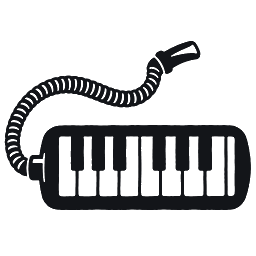
Piano keys, wind power
A melodica is a keyboard you blow into, and Britain’s school cupboards have kept quiet about it for decades. We compared six, from the Yamaha Pianica to the Suzuki Melodion.
By Rhys Entwistle, updated 4 November 2026
Act I
A melodica is a small keyboard with a mouthpiece. You blow, you press keys, and free metal reeds answer in the manner of a harmonica that has been taught the piano layout. Most of Britain met one in a school cupboard, somewhere between the triangle and a recorder with a split lip.
That reputation does the instrument a disservice. We read the listings for six of them, and on paper they describe a wind instrument with real range, real dynamics and no embouchure to learn, which is rarer than it sounds.
The melodica divides the labour. Your lungs supply the air, your fingers choose the notes, and neither can help the other. It holds a note exactly as long as you can, and not a second longer.
Act II
Our order puts the Yamaha first and the Cahaya last, and the gap is smaller than a ranking implies. Every melodica here has keys and a way to get air in. They differ in range, in how you hold them and in what arrives in the box.
Admit I
Yamaha Pianica P-37D
Classroom players who want a case and a seal
| Keys | 37, f to f3 |
|---|---|
| Weight | 790 g, claimed |
| In the box | Case, mouthpiece, extension pipes |
| Colour | Dark red |
4.5/5 on Amazon from 941 ratings
See it on Amazon
Admit II
Tuyama TMD-137 Melodica
First-timers and dub fans who want everything included
| Keys | 37 |
|---|---|
| Size | 47.7 × 10.5 × 4.5 cm |
| In the box | Mouthpiece, tube, case, chart |
| Colour | Black |
4.4/5 on Amazon from 351 ratings
See it on Amazon
Admit III
Suzuki Melodion Alto M-37C plus
Players after a 37-key alto, left or right-handed
| Keys | 37 |
|---|---|
| Voice | Alto |
| Hands | Right or left |
| Model | M-37C plus |
4.3/5 on Amazon from 68 ratings
See it on Amazon
Admit IV
Stagg 32-key melodica, red
Players who want a handle or a desk tube
| Keys | 32, F to C |
|---|---|
| Range | Two and a half octaves |
| In the box | Two mouthpieces, carry bag |
| Colour | Red |
4.6/5 on Amazon from 924 ratings
See it on Amazon
Admit V
Eastar 37-key soprano melodica
Table players who want two spare tubes included
| Keys | 37 |
|---|---|
| Reeds | Phosphor bronze, claimed |
| In the box | Two tubes, mouthpieces, bag, strap |
| Colour | Black |
4.5/5 on Amazon from 457 ratings
See it on Amazon
Admit VI
Cahaya 32-key melodica
Curious beginners wanting a compact zipped kit
| Keys | 32, 19 white and 13 black |
|---|---|
| Length | About 41.5 cm |
| Body | ABS plastic |
| In the box | Tube, mouthpiece, zipped case |
4.4/5 on Amazon from 6,100 ratings
See it on AmazonThe Suzuki Melodion has scarce stock on Amazon at the time of writing. Check availability before you plan a birthday around it.
Yamaha builds the Pianica for schools, and it shows. The P-37D has 37 keys running from f to f3, a hard case in a matching colour and an extension pipe set, all within a claimed 790 g. The case, says the maker, doubles as a music stand.
The listing describes a seamless rubber seal around the air chamber and a separate spring under every key. Those are the right things to engineer in a melodica. It is the one we would hand to a ten-year-old and a retired organist alike.
Tuyama says the TMD-137 suits dub lovers and first-timers equally, which covers most people who buy one. It has 37 keys, a hand strap on the underside and measures 47.7 × 10.5 × 4.5 cm. Mouthpiece, mouth tube, case and fingering chart are in the box.
The claimed round, present tone is the selling point. The strap is what makes one-handed playing with the short mouthpiece comfortable, and one-handed is the dub posture.
Suzuki’s Melodion has 37 keys here and, going by the name, the alto voice. The listing notes that it suits both right-handed and left-handed players, a courtesy most melodicas leave unmentioned.
Stock is scarce, which is why it sits third rather than first. A melodica you cannot find is a hard instrument to recommend, though if it turns up it deserves a long look.
The Stagg covers two and a half octaves from F to C on 32 keys, in solid plastic that the listing calls easy to clean. It plays on a desk with the tube, or in the hand using the handle on the underside.
A replacement mouthpiece, a detachable flexible tube and a soft carry bag come with it. In red, as supplied, it is also the easiest melodica to find in a dark cupboard.
Eastar calls its instrument a soprano and claims phosphor bronze reeds in an ABS body. Two soft long tubes, short mouthpieces, a carrying bag and a shoulder strap are included, which is generous in tubes.
The listing pitches three modes: direct blow with one hand, extension tube with both, and tabletop. That happens to be the real list of positions a melodica offers, a rare moment of marketing and reality agreeing.
The Cahaya has 32 keys, 19 white and 13 black, with an integrated hand strap, a short mouthpiece, a long bendy tube and a zipped case. The listing gives its length as about 41.5 cm.
It is a sensible first melodica for anyone who wants to learn whether the habit sticks. The smaller range is the reason it sits last, not any fault in the listing.
Act III
Range separates one melodica from another more than any other figure on the listing. Our six split into two camps, 32 keys and 37 keys, and the extra five are worth having if you play from piano music.
| The act | Best for | Rating | Where |
|---|---|---|---|
| Yamaha Pianica P-37D | Classroom players who want a case and a seal | 4.5/5 | Amazon |
| Tuyama TMD-137 Melodica | First-timers and dub fans who want everything included | 4.4/5 | Amazon |
| Suzuki Melodion Alto M-37C plus | Players after a 37-key alto, left or right-handed | 4.3/5 | Amazon |
| Stagg 32-key melodica, red | Players who want a handle or a desk tube | 4.6/5 | Amazon |
| Eastar 37-key soprano melodica | Table players who want two spare tubes included | 4.5/5 | Amazon |
| Cahaya 32-key melodica | Curious beginners wanting a compact zipped kit | 4.4/5 | Amazon |
The 32-key melodica reaches from F to C, which is enough for hymns, folk tunes and most pop melodies. The Stagg and the Cahaya both sit here, and both are easy to carry.
The 37-key melodica adds the notes at either end and covers three full octaves, f to f3 on the Yamaha. Eastar, Tuyama and Suzuki also have 37, and any of them lets you play a piano part without transposing.
The Suzuki is listed as an alto, so expect a lower, rounder voice than a bright soprano. Neither is better. They simply suit different tunes, and a band would use both.
Act IV
A melodica listing is short, and nearly every line in it matters. This is what we read in the listings before ranking anything, and what we would read if the choice were yours.
| Detail | Why it matters |
|---|---|
| Number of keys | Decides how much of a tune fits without moving your hand |
| Alto or soprano | Decides the pitch and the character of the voice |
| Mouthpiece and tube | Decides whether you can play both ways, standing or seated |
| Strap or handle | Decides how comfortable one-handed playing will be |
| Case or bag | Decides where the instrument lives between lessons |
| Stock | A scarce listing deserves a second look at the seller |
Most listings say what the body is made from and then stop. Plastic is the norm and it is perfectly good. A melodica body is a box for air, and what matters more is whether the pads seal, which Yamaha addresses directly and others leave to chance.
Act V
The melodica sits between several better-known instruments and borrows from each. Set beside them, its place is clearer, and so is the reason it keeps surviving.
| Instrument | How it makes sound | What the melodica does differently |
|---|---|---|
| Harmonica | Breath across reeds, notes chosen by position | The notes sit on a keyboard, so you can see them |
| Accordion | Bellows across reeds, notes chosen by keys or buttons | Lungs replace the bellows, and the whole thing weighs far less |
| Recorder | Breath through a fipple, notes chosen by finger holes | It plays two or three notes at once, which a recorder cannot |
| Small electronic keyboard | Electronics and a speaker | No power, no speaker, and breath control over every note |
It needs no batteries and no tuning, fits in a bag and rewards a trained ear. It is a lighter route to a keyboard than a piano, and a more forgiving one than a recorder.
Act VI
Inside every melodica sits a plate of free reeds, thin metal tongues that vibrate when air passes over them. The harmonica, the accordion and the harmonium run on the same principle. Nothing here is new, only the packaging.

Press a key and a small pad opens, letting air reach one reed. Release it and the pad closes. There is no hammer and no string, so a melodica has no touch sensitivity in the piano sense: loudness comes from the breath, not the finger.
That is why a steady breath matters more than a quick hand. Long phrases and gentle swells come naturally, and fast short notes ask for a light tongue on the mouthpiece.
A melodica speaks at once, though not always politely. Blow harder and the pitch can shift slightly as well as the volume, which a good player uses and a beginner tries to hide.
Each reed is fixed to its pitch at the factory. Yamaha says its brass reeds are fine-tuned and treated by specialists, and offers that as the reason its tuning stays put. For you, the meaning is plain: no pegs, no screws, nothing to adjust at home.
Act VII
The melodica asks one early question, and it is which of two positions you prefer. Every model in our six allows both.
The Tuyama and the Cahaya both have a strap on the underside for this. It leaves one hand holding and one playing, so the tune is single notes.
With the tube fitted you play like a pianist who happens to be holding a hose. Chords, octaves and left-hand parts all work, and the Eastar ships with two tubes in case one gets bent in the wrong direction.
Yamaha takes the plain route with the P-37D, the Stagg adds a handle and the Cahaya an integrated strap. Hold a melodica for ten minutes and you will form an opinion on which is right, so check the listing first.
Act VIII
Choose tunes you can already hum and the melodica does the rest. All five below can be played in C, on white keys only, which keeps the first week simple.
On day one find middle C and play five notes up and back on a single breath. By day three, play Ode to Joy slowly with a steady tongue. By day seven, add a second hand with the tube fitted and try a two-note chord under the tune.
That timetable assumes ten minutes a day and a household that tolerates ten minutes a day. The second condition is the harder one.
Act IX
The melodica as most people know it arrived in the 1950s, when Hohner, the German harmonica maker, put a keyboard onto a free-reed plate and a mouthpiece on the end. It was sold partly as a toy and partly as a proper instrument, and it has never settled the question.
| Name | Maker | Where it comes from |
|---|---|---|
| Melodica | Hohner | The German original of the 1950s, now the name for the whole family |
| Pianica | Yamaha | Built with classrooms in mind, case included |
| Melodion | Suzuki | The Japanese rival, sold in several voices |
The melodica’s best-known champion is Augustus Pablo, the Jamaican musician and producer whose reedy minor-key lines became a sound of dub. East of the River Nile is the quickest way to hear what the instrument can do when nobody hands it a worksheet.
In British classrooms the melodica arrived as a way to teach melody and the keyboard layout at once. Many adults remember it. Some remember it fondly, and a few can still play the first line of one tune.
Act X
A melodica needs less care than most wind instruments, but the parts that touch your mouth need some. The mouthpiece and tube come off for this reason, and the manual is the authority on how to treat them.
Act XI
People ask this as though the answer were close. It is not. The sceptics are mostly remembering a classroom, and a classroom is not a verdict.
Act XII
Buying a melodica as a gift is straightforward, because most of the choice is about what is in the case. The listings are explicit, so match them to the player.
The melodica is, in short, the gift that makes a noise but not a mess. Any adult who has opened one and found the tube will tell you the first note arrives before the instructions do.
Act XIII
Most faults in a melodica are small, and nearly all of them come from air going where it should not. Work down this table before you blame the reeds.
| Symptom | Likely cause | What we would do |
|---|---|---|
| A note is quiet or silent | Key not fully pressed, or a loose tube | Press fully and push the tube home |
| The pitch wobbles | Breath too heavy or uneven | Ease off and steady the air |
| Keys feel sticky | Dirt around the key or damp in the case | Follow the manual, never force a key |
| Hissing at the mouth end | Loose mouthpiece fitting | Refit it and check the seal |
If a reed buzzes on its own or a key will not rise, stop. The reed plate is sealed for a reason, and the maker or a repairer is the right person to open it.
Act XIV
The melodica is one of the few wind instruments that sits beside a guitar without a transposing chart. Its fixed pitch is the catch, because the reeds cannot move, so the rest of the band adjusts.
Two melodicas make a better duet than their size suggests, with one on the tune and one on a held bass note. Add a third player on a Stylophone or a kazoo and you have a school band that few schools would admit to.
Act XV
A melodica records well and badly in about equal measure. The reeds sound clear, but your breath is part of the signal, and a microphone will report on it faithfully.
Put the microphone beside the instrument, not in the line of your breath, and add a pop filter. If the tube is fitted, turn your head away from the capsule. The sound improves at once.
A melodica also pairs well with the odd and unusual: the reedy tone sits next to a Stylophone without a fight, and it makes a gentle bed under a theremin line.
Act XVI
The Yamaha P-37D heads the list, for its case, its seal and its claim to have been designed for the classroom. Behind it, the Tuyama has the better strap and the Suzuki has the better name, when it can be found.
If the melodica has persuaded you that a wind-powered keyboard is an acceptable thing to own, the same school cupboard holds a kazoo and a swanee whistle. The rest of the bill is stranger still.
Encore
Yes. It has a full chromatic keyboard, fixed tuning, breath control over every note and a recorded history in dub, folk and jazz. The doubt comes from the classroom, not from the instrument.
The notes are laid out as on a piano, so anyone who has seen a keyboard can find a tune. The skill is in the breath: steady air for long notes, a light tongue for short ones.
Common sizes are 26, 32 and 37. The six we compared have 32 or 37. The extra keys give you more range, which matters if you play from piano music rather than by ear.
Augustus Pablo is the name to start with, on albums such as East of the River Nile and King Tubby Meets Rockers Uptown. Dub and reggae producers have used the sound ever since.
Yes, two or three notes at once, as on any keyboard. Fit the tube so both hands are free. The limit is air: every note in the chord draws on the same breath.
Take off the mouthpiece and tube and wash them as the manual describes. Keep water away from the keyboard body unless the manual says otherwise, and let every part dry before it goes back in the case.
Not at home. The reeds are set to their pitch at the factory and there is nothing to turn. If a reed has gone wrong, the maker or a repairer is the person to ask, and the manual says whom.
Yamaha calls its version the Pianica and Suzuki calls its own the Melodion. Hohner, the German maker that popularised the instrument in the 1950s, used the name melodica.